
Widespread throughout Salento, the underground oil mills bear witness to the flourishing economy of a distant past. This testimony is even stronger in Morciano di Leuca: nowadays there are eighteen left, a significant number considering that the entire community once numbered only 131 households. Very interesting is their age: some of them date from the 9th century. The underground oil mills of Morciano are made unique particularly by the fact that they were built on the ruins of the containers of another flourishing economy: the granaries.
The Iapyges, Messapians, Romans are the populations that have inhabited this territory. In the 11th century, the Byzantine influence brought about a major economic transformation in Salento, switching from the economy of wheat to that of olive and thus of oil. The signs of such a transformation are visible still today: landscapes characterized by silver swaths and studded with massive twisted trunks of thousand-year old olive trees.
The caves housing the oil mills were created by simply tearing down the granaries which take up most of the old town underground. Despite that most of the granaries were destroyed, visitors can admire the upper horizontal sections of the oil mills which still preserve the rolling stones, thus getting a sense of the economic splendor of Morciano in times of yore.
Events nearby
In the coming days, within 15 km.
Karaoke
Karaoke night at Bar da Sasi to sing together.
L’asino fofo
Launch of the book "L’asino Fofo" with the author and illustrator at Libreria Idrusa.
Yuts And Culture
Yuts and Culture in concert: funk and soul of the '70s reimagined.
Salento International Film Festival 2026
International independent cinema in the heart of Salento
More places nearby
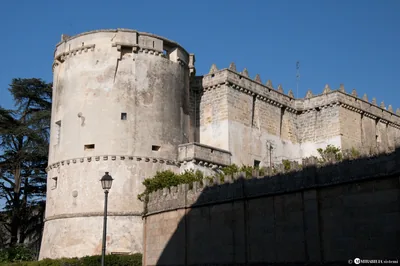 Castles, towers and palacesCastello Valentini-CastriotaThe Valentini-Castriota Castle stands in the central Piazza San Giovanni
and still bears the symbols and decorations of the noble families that
inhabited it. Morciano di Leuca very close
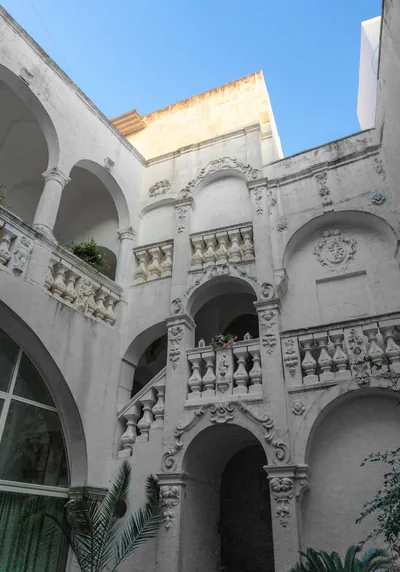 Castles, towers and palacesPalazzo CeuliPassing Piazza della Repubblica and taking Via Crocifisso, the courtyard of
Palazzo Ceuli opens on the left. It is one of the symbols of Salve, an
architectural jewel turned into a bed&breakfast. Salve 1.7 km away
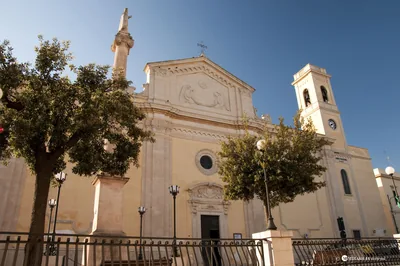 Churches and cryptsChiesa madre di San Nicola MagnoThe church stands on the remains of an ancient temple dedicated to the god
Janus and preserves one of the oldest and most valuable organs in Puglia. Salve 1.8 km away
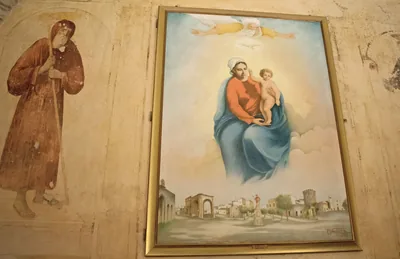 Churches and cryptsSantuario di Santa Maria di Leuca del Belvedere o Leuca PiccolaIn the hamlet of Barbarano del Capo, the Basilica of Leuca Piccola was the
final stop for pilgrims heading to the Madonna di Leuca. Morciano di Leuca 2 km away
- Churches and cryptsThe Crypt of the PantocratorSet in the green of the countryside and carved out of rock, the Crypt of Christ Pantocrator di Giuliano dates back to the 9th century. Castrignano del Capo 2.2 km away
- Churches and cryptsChiesa di Santa MarinaAncient small church built in the Middle Ages in Salve, enlarged and restored in 1648 in full Baroque style. Salve 2.3 km away