
Automatically translated from Italian.
The reserve covers an area of 28 hectares in the province of Lecce.
The Reserve is located along the Adriatic coastline and falls within the territories of the municipalities of Lecce and Vernole. It consists of an Aleppo pine and eucalyptus forest planted in the early 1900s, coinciding with land reclamation efforts to eradicate malaria that infested the marshy areas of the Salento coast. The forest's exposure to sea winds, the low human impact due to the establishment of the protected area, as well as a series of fires in the early 1980s, have diversified the reserve's landscape. Today, it offers a variety of very different habitats: from the artificially planted pine forest to the naturally regenerated pine forest after the fires, from the Mediterranean maquis slowly reclaiming the undergrowth of the pine forest, to the marshy water mirrors, evidence of the extensive land reclamation work carried out by humans, from the shady oak stands to the extensive eucalyptus populations.
The vegetation consists of tall trees and various herbaceous and shrubby plants. Eucalyptus stands can be admired where the old marsh once stood, alongside a mosaic of Mediterranean maquis and typical marsh plants, such as the common glaciola, marsh rush, sedge, and reed, thanks to seasonal water stagnation. Aleppo pine and maritime pine can be seen along the coastal strip, where the undergrowth of Mediterranean maquis shrubs dominates, with holm oak prevailing. Finally, climbing species are important in completing the evergreen Mediterranean forest, such as common ivy, Smilax, honeysuckle, and wild rose.
The story
For now this text is only available in Italian.
La Riserva Naturale di San Cataldo occupa 28 ettari lungo il litorale adriatico, nei comuni di Lecce e Vernole 4. È costituita da un bosco di pino d'Aleppo ed eucalipto impiantato agli inizi del Novecento durante le bonifiche contro la malaria 4. Gli incendi dei primi anni Ottanta e l'esposizione ai venti marini hanno differenziato gli habitat, tra pineta artificiale e spontanea, macchia mediterranea, zone palustri e lecceta 4. A San Cataldo sorgeva in età romana un porto, che le fonti collegano ad Adriano 2,3.
History
Età romano imperiale (I-III secolo d.C.)
A San Cataldo esisteva un molo antico a doppia cortina di grandi blocchi di calcare locale, con riempimento in opus caementicium 1. In epoca romana il sito era sede di un importante porto intitolato ad Adriano, che ne aveva ordinato la ricostruzione, secondo Pausania 2; il molo è datato intorno al II secolo d.C. 3. I pochi resti visibili sono vicino al faro 2,3.
Dopo l'età romana
Il porto cadde in disuso nel corso dei secoli e il luogo fu sopraffatto dalla natura, diventando una palude 3.
1897
Fu costruito il faro di San Cataldo, nell'insenatura che ospita i resti del molo antico 3.
inizio XX secolo
Il bosco di pino d'Aleppo ed eucalipto fu impiantato in concomitanza con le bonifiche contro la malaria 4.
Età fascista
La bonifica della palude avvenne in epoca fascista da parte dell'Opera Nazionale Combattenti 3.
1977uncertain
Secondo una scheda web, la riserva fu istituita nel 1977.5
primi anni Ottanta
Una serie di incendi interessò il bosco e ne diversificò l'aspetto 4.
Dates with an empty square are uncertain: few or unverified sources report them.
Architecture and works
Il molo romano è una struttura a doppia cortina di blocchi calcarei con catene trasversali in blocchi e riempimento in opus caementicium 1. Oggi nell'insenatura sorge un piccolo porticciolo che può ospitare circa 200 imbarcazioni 3. Il capitolo di Ferrari e Quarta ripercorre l'evoluzione del paesaggio costiero dal molo romano alla torre medievale, al faro, al nuovo molo e al tram dell'Ottocento 6.
Antiquity
Nature
La riserva si estende per 28 ettari 4. Comprende pineta di origine artificiale, pineta naturale nata dopo gli incendi, macchia mediterranea che riconquista il sottobosco, specchi d'acqua palustri, fustaia di leccio ed estesi popolamenti di eucalipto 4. Dove sorgeva la vecchia palude crescono eucalipti e un mosaico di macchia e piante palustri come gladiolo comune, giunco di palude, carice e falasco 4. Lungo la fascia litoranea si trovano pino d'Aleppo e pino marittimo, con sottobosco in cui prevale il leccio; tra le liane sono citate edera, Smilax, caprifoglio e rosa canina 4. Secondo una scheda web, la macchia comprende corbezzolo, lentisco e mirto e vi sono tre sentieri (della Palude, delle Orchidee, delle Ghiande) 5. I dati GBIF entro 1 km indicano 30 specie osservate, tra cui martin pescatore e gabbiano corallino come specie protette 7.
Visiting
Curiosities
- Secondo FAI, a San Cataldo sbarcò Ottaviano dopo aver appreso la notizia della morte di (testo troncato nella fonte) 2.
Where sources disagree
Further reading
- Ivan Ferrari, Alessandro Quarta, San Cataldo (Lecce, Italy). The Historical Evolution of the Coastal Landscape, Firenze University Press, 2020
- Il cammino dei fari e delle torri costiere di Puglia (2023)
- S. Zampolini, Documenti per una carta archeologica della Puglia meridionale, Metodologie di Catalogazione dei beni archeologici 1.2, Martano, Edipuglia, 1997
Sources (7)
The story is written only from these sources: the numbers in the text refer here. Last updated: October 21, 2026.
- 1.CartApulia (Regione): San Cataldo - molo (età romana) · institutional
- 2.FAI I Luoghi del Cuore: MOLO ROMANO DI SAN CATALDO · web
- 3.Adobe InDesign CC 13.0 (Windows), Il cammino dei fari e delle torri costiere di Puglia (2023) — brano OCR · book
- 4.Regione Puglia, scheda del luogo (viaggiareinpuglia.it) · institutional
- 5.San Cataldo State Nature Reserve — Italian Botanical Heritage (luoghi) · web
- 6.San Cataldo (Lecce, Italy). The Historical Evolution of the Coastal Landscape — Firenze University Press (capitolo di Ivan Ferrari e Alessandro Quarta, 2020) · web
- 7.GBIF: specie osservate entro 1.0 km · study
Events nearby
In the coming days, within 15 km.
Farmers' Social Market
Zero-kilometer vegetables, legumes and natural products every Thursday
Multifaceted Art
An international collective exhibition on contemporary identity
Between Visible and Imagined
Paintings and graffiti exploring memory, identity and vision
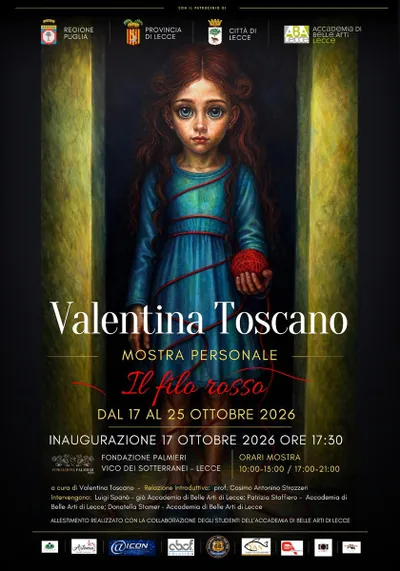
The Red Thread - Solo Exhibition by Valentina Toscano
Solo exhibition by Valentina Toscano from October 17 to 25

Hòlos. The Art of Care and Well-being
Holistic care event exploring interconnections between human, animal, and environmental health.
Natura e Tracce Umane
Art and nature meet on a journey through landscape and transformation.
Nature around here
30 species observed within 1 km.
Protected species
- Martin pescatore Alcedo atthis · Uccelli all. I
- gabbiano corallino Ichthyaetus melanocephalus · Uccelli all. I
Most observed
- ricino Ricinus communis
- Pettirosso Erithacus rubecula
- Gazza Pica pica
- Ballerina bianca Motacilla alba
- Piro piro piccolo Actitis hypoleucos
- Marangone Phalacrocorax carbo
- Cardellino Carduelis carduelis
- Tortora dal collare Streptopelia decaocto
Observations: GBIF.org
More places nearby
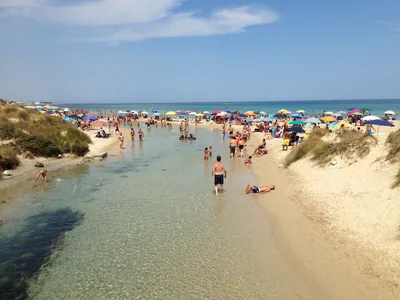 Sea and cavesTorre ChiancaOn the border of the Nature Park of Rauccio, Torre Chianca is the
background of the Idume river which flows into the Adriatic Sea, which
caresses the long white sandy beaches. Lecce 5.7 km away
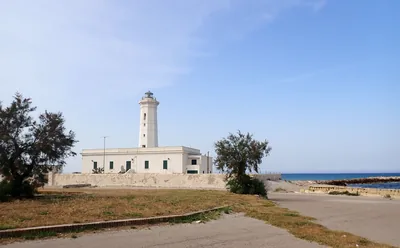 Sea and cavesSan CataldoA moored dock managed by \"Darsena Salento\" located in the immediate hinterland of San Cataldo di Lecce, accessible via a canal. Lecce 6.4 km away
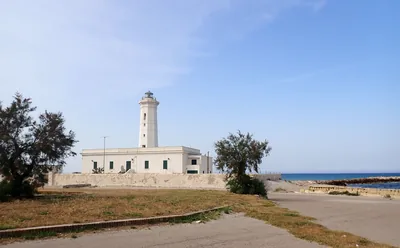 Castles, towers and palacesSan Cataldo LighthouseAncient lighthouse overlooking the maritime hamlet of San Cataldo, built
near the remains of an ancient pier from the Roman era. Lecce 6.4 km away
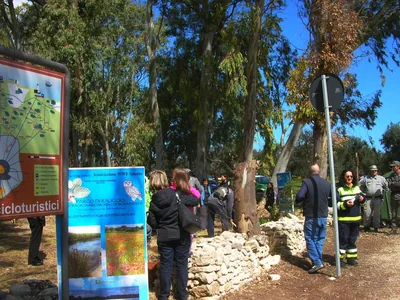 Nature and gardensRegional Nature Park Palude e Bosco di Rauccio - Sorgenti IdumeFrom Specchia della Milogna, to the thick holm oak forest, as far as the
short idume river, the Park of Rauccio discloses a lush and vivid nature. Lecce 7.9 km away
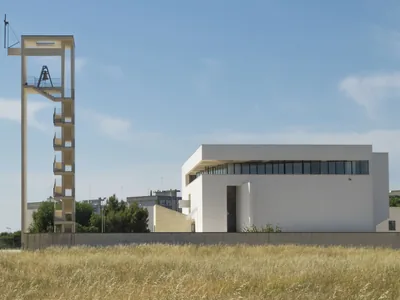 Churches and cryptsChurch of San Giovanni BattistaOne of the most expressive works of modern architecture in Salento, the
result of a fruitful collaboration among architects, artists and
liturgists. Lecce 8.1 km away
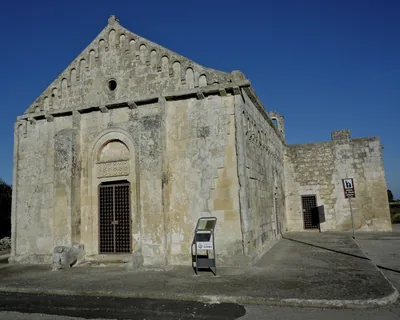 Churches and cryptsChurch of Santa Maria d’AurioThe Church of the Madonna d 'Aurio dates back to the 11th century, and the
growth of devotion over the centuries marked the origins of the nearby town
of Surbo. Lecce 8.3 km away