
Automatically translated from Italian.
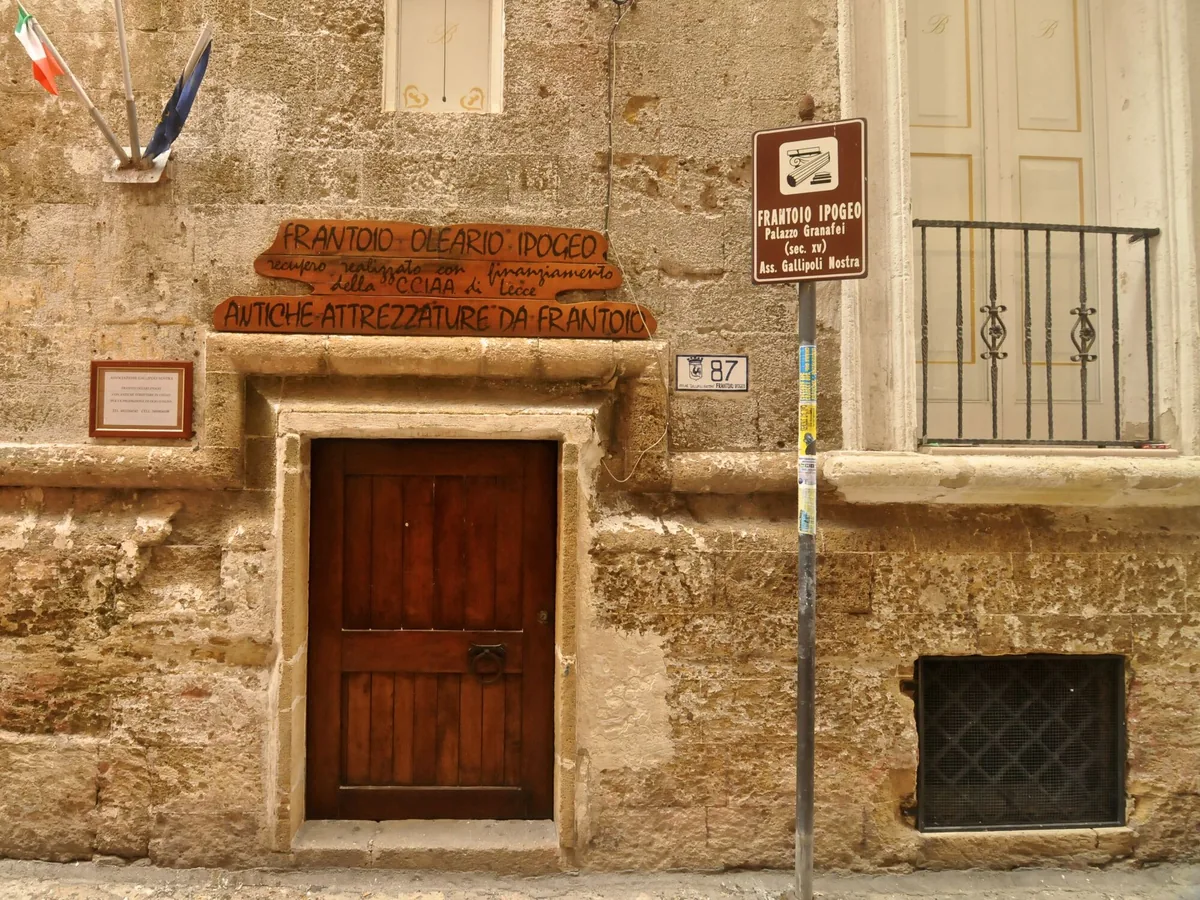
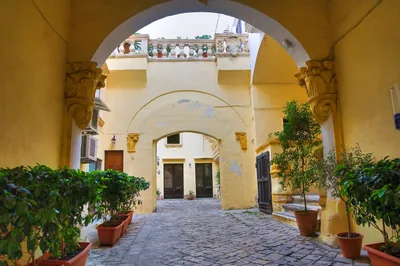
In the historic center of Gallipoli, along Via De Pace, stands Palazzo Granafei, named after its late 19th-century owners. Initially, the building belonged to the Spanish family of the Vasques D'Acugna, who arrived in the city in the 16th century.
A large portal reminiscent of the Catalan-Durazzese style and Renaissance windows characterize the building's facade, which stands out especially for an inscription dated 1625 in Spanish, by Don Francesco D'Acugna, dedicated to Philip IV of Spain.
Adding to the richness of the complex is the presence of an oil mill in the palace's basement, featuring 17th-century presses and grinding mills, currently open to visitors.
The story
For now this text is only available in Italian.
Palazzo Granafei si trova nel centro storico di Gallipoli, in via Antonietta De Pace 87, e prende il nome dai proprietari di fine Ottocento 1. In origine l'edificio apparteneva alla famiglia spagnola dei Vasques D'Acugna, giunta in città nel XVI secolo 1. Il prospetto ha un ampio portale di memoria catalano-durazzesca e finestre rinascimentali, e un'incisione in spagnolo datata 1625 1. Nell'ipogeo si trova un frantoio oleario, costruito tra la fine del XVI e la metà del XVII secolo, con presse e macina del Seicento 1,2. Lo stato di apertura va verificato: nel 2016 il Ministero lo indicava temporaneamente chiuso 4.
History
XVI secolo
La famiglia spagnola dei Vasques D'Acugna giunge a Gallipoli e diventa proprietaria dell'edificio, detto per questo palazzo d'Acugna. 1,2
Fine XVI - metà XVII secolo
Sotto il palazzo d'Acugna, oggi Granafei, vengono costruiti i frantoi, in realtà due strutture ipogeiche con schema articolato e forma mistilinea. 2
1625
Data dell'incisione in lingua spagnola di don Francesco D'Acugna, con dedica a Filippo IV di Spagna. 1
Fine XIX secolo
Il palazzo appartiene alla famiglia Granafei, da cui prende il nome attuale. 1
1992uncertain
Un volume sui frantoi ipogei riferisce che con D.M. del 24 giugno 1992 il frantoio fu "dichiarato"; il brano è troncato e non dice di cosa. 3
Dates with an empty square are uncertain: few or unverified sources report them.
Architecture and works
Il prospetto è caratterizzato da un ampio portale di memoria catalano-durazzesca e da finestre rinascimentali 1. Il frantoio ipogeo, indicato come esempio significativo degli stabilimenti per la produzione dell'olio, ha presse olearie, una macina del XVII secolo e attrezzi per la lavorazione delle olive 4. Secondo la scheda di MuseiOnline è un frantoio del Seicento di circa 200 mq, sotto i palazzi D'Acugna e Grassi, con presse calabresi e una genovese 5. Una descrizione in inglese parla di un doppio frantoio sotterraneo con macina azionata da un asino, presse e vasche 6. Un'opera sulla Puglia riproduce la "macina del XVII secolo" nella zona dei torchi del secondo frantoio 7.
Visiting
Indirizzo: via Antonietta De Pace 87, 73014 Gallipoli 1. La scheda regionale (non datata) indica il frantoio come "attualmente visitabile" 1. La scheda del Ministero della Cultura, aggiornata al 2 marzo 2016, riporta ingresso gratuito e chiusura temporanea "fino a nuove disposizioni" 4. MuseiOnline indica ingresso gratuito e orari giornalieri, senza datare 5. Una guida del 1991-1992 riportava un'apertura aprile-ottobre, 9-12 e 17-21: dato vecchio, da non considerare attuale 8,9. Gli orari vanno confermati prima di visitare.
Curiosities
Where sources disagree
On these points the sources give different versions.
Further reading
- Antonio Monte, Le miniere dell'oro liquido. Archeologia industriale in Terra d'Otranto, i frantoi ipogei, 2000 3
- A. Monte (a cura di), Frantoi ipogei del Salento, 1995 2
- E. Pindinelli (a cura di), Illustrazione storica sulla produzione ed il commercio degli oli in Gallipoli, Gallipoli, 1980 2
- Federico Natali, Gallipoli nel Regno di Napoli. Dai Normanni all'unità d'Italia, 2007 7
Sources (10)
The story is written only from these sources: the numbers in the text refer here. Last updated: October 21, 2026.
- 1.Regione Puglia, scheda del luogo (viaggiareinpuglia.it) · institutional
- 2.CartApulia (Regione): Palazzo Granafei - frantoio · institutional
- 3.Antonio Monte, Le miniere dell'oro liquido – archeologia industriale in Terra d'Otranto, i frantoi ipogei (2000) — brano · book
- 4.Ministero della Cultura, luoghi della cultura: Frantoi ipogei di Palazzo Granafei (aggiornato 2016-03-02) · institutional
- 5.Frantoio oleario ipogeo di Palazzo Granafei — MuseiOnline · institutional
- 6.Frantoio Ipogeo Granafei, Gallipoli — Showcaves.com · web
- 7.Federico Natali, Gallipoli nel Regno di Napoli – dai Normanni all'unità d'Italia (2007) — brano · book
- 8.Millon, Marc, The wine roads of Italy (1991) — brani · book
- 9.Millon, Marc, The wine roads of Italy (1992) — brani · book
- 10.Gallipoli, porto europeo dell'olio — Fondazione Terra d'Otranto, autore Emilio Panarese (05/11/2012; da Tempo d'oggi, 18/12/1974) · web
Events nearby
In the coming days, within 15 km.
Beyond The Wall
Crafts and contemporary art dialogue in the spaces of Parabita.
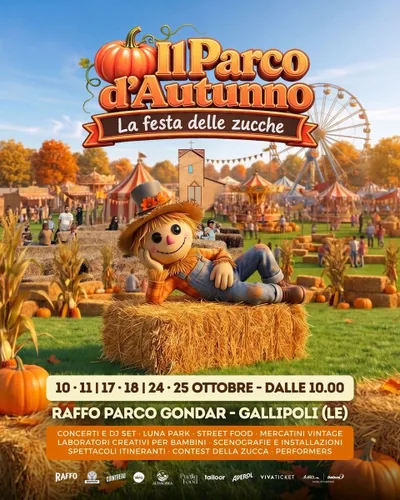
Il Parco d'Autunno – Pumpkin Festival
Four autumn weekends with a pumpkin theme at Raffo Parco Gondar, with family activities and a food area.
Without a Care
Karaoke with Michele Veschi for a fun-filled musical evening.
Andrea Baccassino Show
Musical concert with Andrea Baccassino in Galatone's park
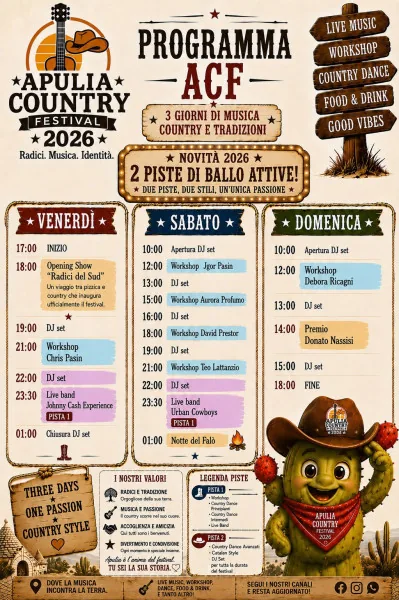
Apulia Country Festival with Urban Cowboys
Three days of music, dancing and country workshops in Nardò
More places nearby
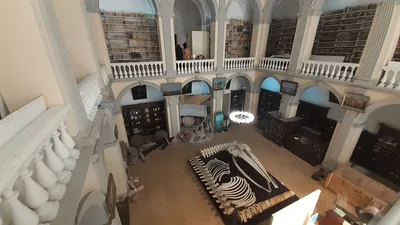 Museums and theatresCivic Museum “Emanuele Barba” and Coppola Collection HallPaintings, archaeological finds, ceramics and furnishings, the Gallipoli
Civic Museum tells the story of Salento in its diverse and fascinating
facets. Gallipoli very close
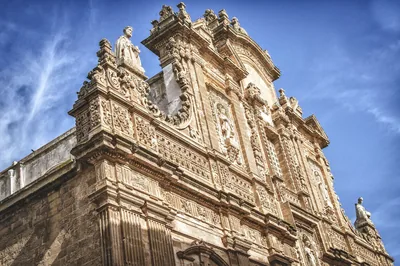 Churches and cryptsCo-Cathedral of Saint Agatha the VirginThe beautiful Cathedral of Saint Agata rises at the highest point of Old
Gallipoli and suddenly reveals itself in a narrow street of the historic
center. Gallipoli very close
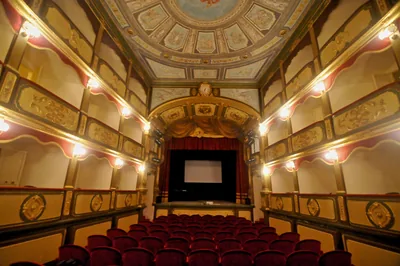 Museums and theatresTeatro GaribaldiSet like a jewel in the historic center, Gallipoli's small 19th-century
theater is a gem in the elegant living room of the beautiful city. Gallipoli very close
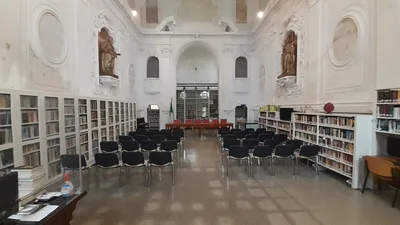 Museums and theatresGallipoli Public LibraryGallipoli's library is one of the oldest and richest in the entire Salento
area, and it is located in a historic building of great value. Gallipoli very close
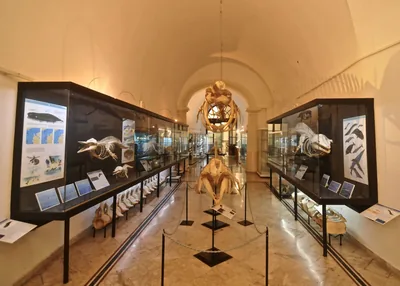 Museums and theatresMuseo del MareFrom fishing techniques to cetaceans, the Gallipoli Sea Museum plumbs the
fascinating secrets of the seabed to learn more about the species and life
of the deep sea. Gallipoli very close
 Castles, towers and palacesPalazzo BalsamoIn the narrow alleys of Gallipoli's old town center stands Palazzo Balsamo,
a splendid example of Baroque architecture. Gallipoli very close