
Castles, towers and palaces
Torre Amati, Torre Capece or del Vento, Norman Tower of Porta Grande
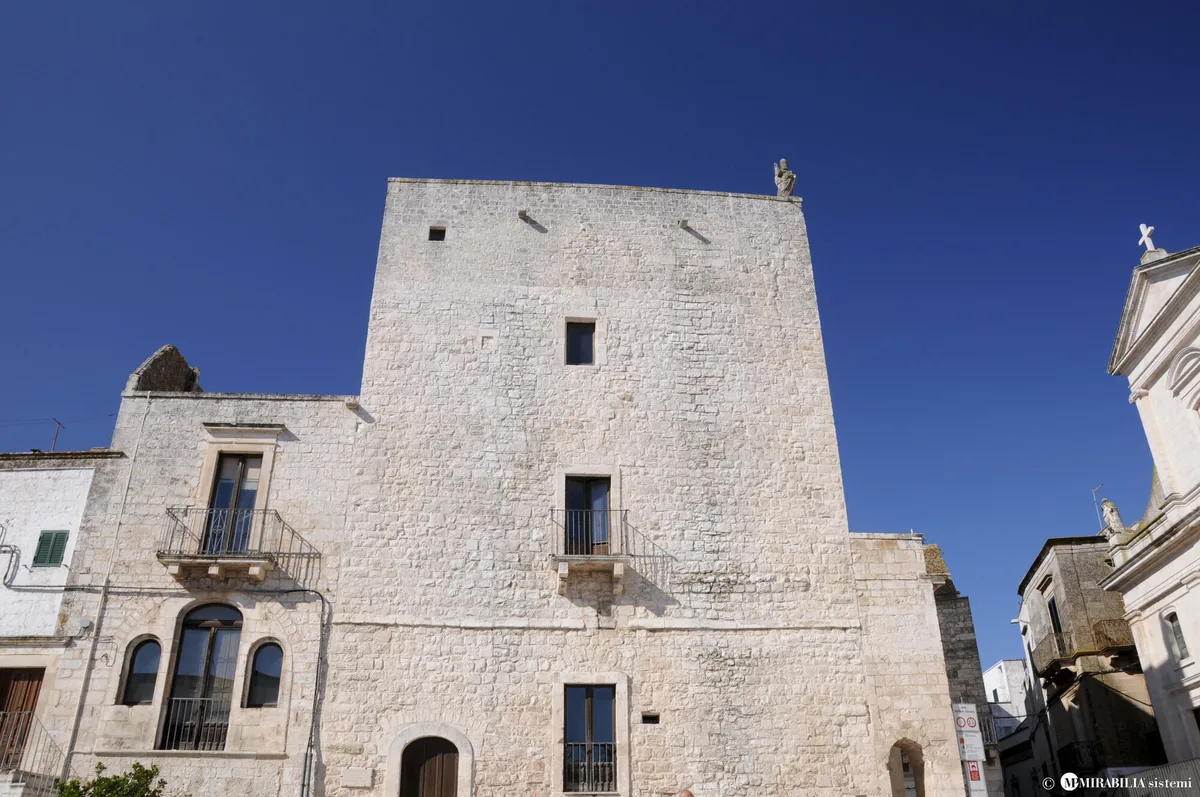
The three buildings (Torre Amati, Torre Capece or del Vento, Norman Tower of Porta Grande) make the group of town towers which characterises the ancient hamlet of Cisternino, whose entrance gate is near Porta Grande, a Norman- Swabian building of the 13th century.
Almost 17 metres high, on whose top there is a small statue of San Nicholas, has been changed over the centuries, the last time in 1995. Nowadays it belongs to the Town Hall and is used for exhibitions and cultural events.
The three building make a group of town towers which characterises the old hamlet of Cisternino, whose entrance gate is near Porta Grande, Norman- Swabian building of the thirteenth century.
The Norman Tower of Porta Grande, almost 17 metres high, on whose top there is a small statue of Saint Nicholas, has been changed over the centuries, the last time in 1995. Nowadays it belongs to the Town Hall and is used for exhibitions and cultural events.
The namesake tower, connected to palazzo Ricci-Capece, is instead also called torre del Vento (the tower of the Wind). In via San Quirico, outside the city walls, there are palazzo Amati and its tower, dating back to late Middle Ages.
The story
For now this text is only available in Italian.
Le tre torri di Cisternino sono la Torre normanna di Porta Grande, la Torre Capece (detta anche del Vento) e la Torre Amati, e costituiscono un complesso di torri urbane dell'antico casale 1. La Torre di Porta Grande, alta circa 17 metri, risale al Tredicesimo secolo con la porta normanno-sveva, è stata riadattata più volte (l'ultima nel 1995) e oggi, di proprietà comunale, ospita mostre ed eventi 1. La Torre Capece è annessa al palazzo Ricci-Capece 1. La Torre Amati è presso il palazzo Amati, in via San Quirico, fuori le mura, e risale al tardo Medioevo 1. Il 9 marzo 1745 il Capitolo decise di acquistare la Torre del Vento da Giuseppe Capece 4.
History
XIII secolo
Porta Grande, edificio normanno-svevo, risale al Tredicesimo secolo e segna l'accesso all'antico casale; la torre normanna di Porta Grande è sottoposta nei secoli a vari riadattamenti.1
Tardo Medioevouncertain
Il palazzo Amati e la sua torre, in via San Quirico fuori le mura, sono datati al tardo Medioevo dalla scheda regionale; alcune guide di viaggio parlano di torre normanna.1,2,3
1693
A Cisternino è attestata la presenza dei Capece, provenienti da Napoli, a partire da questo anno.4
9 marzo 1745
Il Capitolo decide di acquistare per 11 ducati la "Torre del Vento" di Giuseppe Capece.4
1860uncertain
La torre definita localmente "Torre civica" o "Torre Grande", espropriata alla Curia, diventa sede della Guardia Nazionale e del Comune. CartApulia non nomina Porta Grande, ma la descrizione corrisponde alla torre normanno-sveva.5,6
1995
Ultimo dei riadattamenti della Torre normanna di Porta Grande.1
Dates with an empty square are uncertain: few or unverified sources report them.
Architecture and works
La Torre normanna di Porta Grande è alta circa 17 metri e porta in cima una piccola statua di San Nicola 1. Una guida web descrive la torre civica normanno-sveva con base di 8 per 10 metri, come la più importante della cinta difensiva 6. Il Touring Club la descrive quadrangolare e punto di osservazione sulla Valle d'Itria, voluta forse da maestranze normanne e federiciane 7. La Torre Capece è annessa al palazzo Ricci-Capece 1. La Torre Amati è collegata al palazzo Amati; una guida la colloca sulla sommità del Ponte della Madonnina, in via San Quirico 21 1,8. La torre del palazzo Amati è censita in Vincoli in Rete, con interesse culturale non verificato 9.
Visiting
Curiosities
- In CartApulia la torre civica è detta anche "Torre Grande", per distinguerla da quella più piccola ancora visibile lungo le mura orientali del centro storico 5.
Where sources disagree
Further reading
- R. Semeraro, Cisternino. Avvenimenti storici dall'età greco-romana all'unità d'Italia, Edizioni Rosso Giallo e Verde, 1998
- G. Matichecchia, Q. Punzi, La Torre normanno-sveva di Cisternino: vicende storiche e recupero, Brindisi, 1998
- L'Armerista di Cisternino, 2015
Sources (9)
The story is written only from these sources: the numbers in the text refer here. Last updated: October 21, 2026.
- 1.Regione Puglia, scheda del luogo (viaggiareinpuglia.it) · institutional
- 2.VVAA, Apulia, Basilicata y Calabria (2022) — brano · book
- 3.Dominique Auzias, Jean-Paul Labourdette, Guide Pouilles-calabre-basilicate 2025/2026 Petit Futé (2025) — brano · book
- 4.Adobe Acrobat Pro 11.0.0, L'Armerista di Cisternino (2015) — brano OCR · book
- 5.CartApulia (Regione): Torre Comunale · institutional
- 6.Cisternino: cosa vedere — Travel365 · web
- 7.Che cosa vedere a Cisternino — Touring Club Italiano · web
- 8.AA.VV., Puglia (2022) — brano · book
- 9.Vincoli in Rete (MiC): TORRE DEL PALAZZO AMATI · institutional
Events nearby
In the coming days, within 15 km.
Fauré: the French Brahms
A concert dedicated to Fauré and Brahms' influence on his music.
Evento a Martina Franca: Vincenzo Schettini – La fisica della musica 2…
Il Naso
Theatrical performance by Ippolito Chiarello at the Teatro Comunale.
Dowland & Friends
English Renaissance music in tribute to John Dowland
PIANO LAB 2026 - Piano Recital Pietro De Maria
Pianist Pietro De Maria at Politeama Verdi with Scarlatti, Clementi, Beethoven and Chopin.
Hortus Puglia
Hortus Puglia in Ostuni: gardening exhibitions, storytelling, thematic workshops and training sessions.
More places nearby
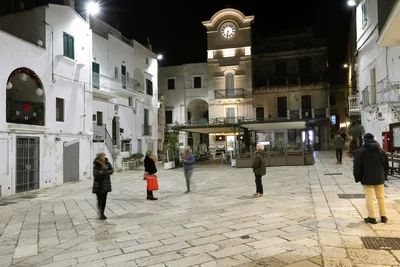 FunPiazza Vittorio EmanueleThe musicality of the architecture and the spontaneity of the encounters
characterize what in Cisternino in the winter is a quiet square and during
the summer becomes a busy meeting place. Cisternino very close
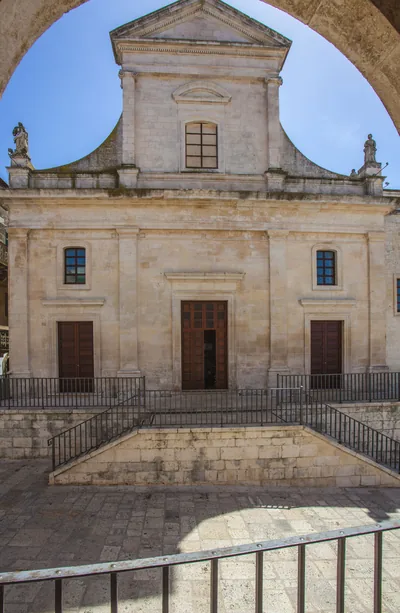 Churches and cryptsChiesa Madre di San Nicola di PàtaraIn the precious casket of art, the neoclassical façade conceals a Madonna
del Cardellino, a splendid example of Apulian Renaissance sculpture. Cisternino very close
- Museums and theatresBotanical Garden "I Giardini di Pomona"A treasure of biodiversity, the Botanic Conservatory depicted a green scenery of fruit trees, wild flora, aromatic plants and exotic rarities. Cisternino 3 km away
- Farmhouses and oil millsMasseria MontalbanoA vestige of the ancient burg of Montalbano Vecchio, this masseria in Ostuni is a treasure trove of history dating from the 16th century. Ostuni 6.8 km away
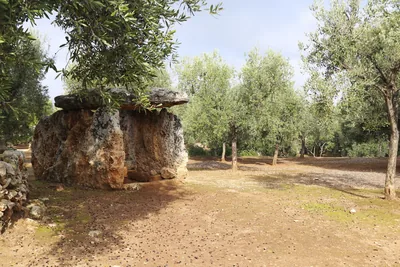 ArchaeologyDolmen di MontalbanoIt is a megalithic building in the locality Pisco Marano, located in the
countryside of Montalbano di Fasano and connected to magical, religious or
funeral rituals. Fasano 7.3 km away
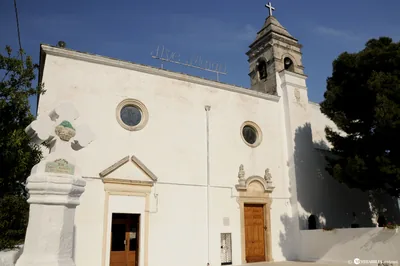 Churches and cryptsSantuario di Pozzo FacetoPicturesque religious building in the heart of the Plain of Olives between
Fasano and Ostuni. Fasano 7.4 km away