
The Sanctuary of Monteoliveto, also known as Madonna della Salute, wanted by the Jesuits in the second half of the seventeenth century in a vernacular style and given in 1725 to the congregation of Olivetan, in the ancient village of Piazza Monteoliveto, in the heart of the ancient village of Taranto.
Annexed to the complex, there is a rudimentary church that the Jesuits decided to replace with the actual factory.
The construction lasted for 77 years until 1763. Four years later, with the suppression of the Compagnia di Gesù by Pope Clement XIV, the complex was entrusted to the care of the Olivetan congregation, which changed the denomination of the temple to church and he turned the college into his convent.
The convent, confiscated by Gioacchino Murat in 1813, was then destined for accommodation for Napoleonic officers. Since then, it has repeatedly changed its use.
In 1936, the city of Taranto was consecrated to the icon of the Madonna della Salute, from which the sanctuary takes its present name. The icon that gives the name to the temple is a sixteenth copy, is lying on the main altar of the church and was made by the painter Antonio Verrio from Lecce.
The story
For now this text is only available in Italian.
Il Santuario di Monteoliveto, o della Madonna della Salute, si trova in Piazza Monteoliveto, nel borgo antico di Taranto 1,2. Fu voluto dai Gesuiti e costruito tra il 1686 e il 1763 1,2,3. Passò poi alla congregazione olivetana, da cui il nome di Monteoliveto 1,2. Nel 1936 Taranto fu consacrata all'icona della Madonna della Salute, da cui il santuario prende la denominazione attuale 1.
History
Seconda metà del XVII secolo
I Gesuiti vollero la nuova chiesa in stile vignolesco, in sostituzione di una rudimentale chiesa annessa al complesso. 1
1686-1763
La costruzione si protrasse per 77 anni, fino al 1763. 1 La scheda CartApulia data la struttura al 1686-1763. 2 Secondo Wikipedia i gesuiti operarono dal 1686 al 1763, con Tommaso Vanneschi. 3
1751
Secondo la Pro Loco di Taranto, l'altare maggiore è del 1751, opera di Antonio di Lucca e Galichio d'Amato. 4
1767-1773
In seguito alla soppressione della Compagnia di Gesù da parte di papa Clemente XIV il complesso fu affidato alla congregazione olivetana, che mutò la denominazione del tempio in chiesa e trasformò il collegio in convento. 1 La data indicata è quattro anni dopo il 1763, cioè 1767, secondo la scheda regionale 1; Wikipedia indica gli olivetani dal 1773 3.
1813
Il convento fu confiscato per decreto di Gioacchino Murat e destinato ad alloggio per gli ufficiali napoleonici; da allora cambiò più volte destinazione d'uso. 1,3
1936
La città di Taranto fu consacrata all'icona della Madonna della Salute, da cui il santuario prende l'attuale denominazione. 1,3
2018uncertain
Secondo un articolo web, i restauri si sono conclusi nel novembre 2018. 5
Dates with an empty square are uncertain: few or unverified sources report them.
Architecture and works
La chiesa è in stile vignolesco 1. Secondo la Pro Loco di Taranto l'architettura è controriformista, a due ordini 4. Secondo fonti web, ha pianta a croce greca e una cupola di circa 10 m su quattro archi, con affreschi 5,6; la scheda comunale descrive la cupola su pennacchi «a cielo stellato» 7. L'icona che dà il nome al tempio è una copia seicentesca posta sull'altare maggiore, realizzata con ogni probabilità dal pittore leccese Antonio Verrio 1; Wikipedia la dice copia della Salus Populi Romani attribuita ad Antonio Verrio 3. Il collegio adiacente, ex Palazzo Visconti, su Corso Vittorio Emanuele II, è del XVII secolo con numerosi rifacimenti 8.
Visiting
Curiosities
- Secondo GCatholic il santuario dista circa 120 m dalla cattedrale di San Cataldo ed è tra le chiese giubilari del 2025. 9
Where sources disagree
On these points the sources give different versions.
Further reading
- De Luca, Patrizia, Il centro storico di Taranto: l'Isola, vol. 1.
- Cazzato, M., Lecce e il Salento 1, Atlante del Barocco in Italia, Roma, De Luca Editori d'Arte, 2015.
- Fornaro, A., Viaggio attraverso la fede e la pietà popolare a Taranto, Taranto, Scorpione Editrice, 2009.
- Rubino, A., Le confraternite laicali a Taranto dal XVI al XIX secolo, Fasano, Schena Editore, 1995.
Sources (9)
The story is written only from these sources: the numbers in the text refer here. Last updated: October 21, 2026.
- 1.Regione Puglia, scheda del luogo (viaggiareinpuglia.it) · institutional
- 2.CartApulia (Regione): Chiesa della Madonna della Salute o di Monteoliveto · institutional
- 3.Santuario della Madonna della Salute (Taranto) — Wikipedia italiana · web
- 4.Chiese di Taranto — Pro Loco di Taranto · institutional
- 5.Alla scoperta del Santuario della Madonna della Salute: un vero e proprio gioiello nel cuore dell'Isola Madre — IAMTaranto (Redazione, 02/07/2022) · web
- 6.14 Best Things to Do in Taranto, Italy — Italy We Love You · blog
- 7.Santuario della Madonna della Salute — Ecosistema Taranto (Comune di Taranto) · institutional
- 8.CartApulia (Regione): Collegio di Monteoliveto (ex Palazzo Visconti) · institutional
- 9.Santuario Madonna della Salute (Taranto) — GCatholic.org · institutional
Events nearby
In the coming days, within 15 km.
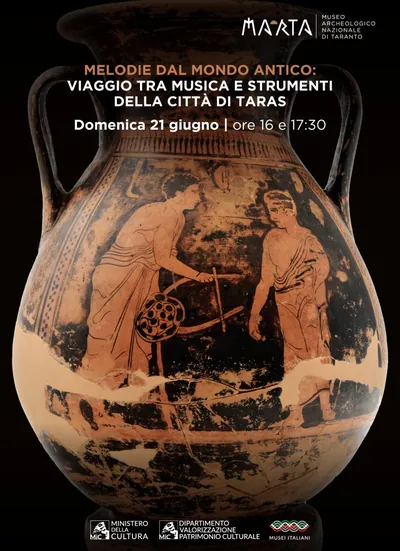
Melodies from the Ancient World: A Journey through Music and Instruments of the City of Taras
A journey through the musical instruments of ancient Taranto
Paisiello 2.0
Musical festival blending tradition and innovation in Taranto

Serena Autieri sings RAFFAELLA – Teatro Orfeo, Taranto
Serena Autieri performs a symphonic tribute to Raffaella Carrà's greatest hits.
Cinderella 301
Fairytale performance with puppetry, animation, and dance for children
MICHAEL JACKSON History and Legend of the King of Pop
Tribute to Michael Jackson with live orchestra and choir
More places nearby
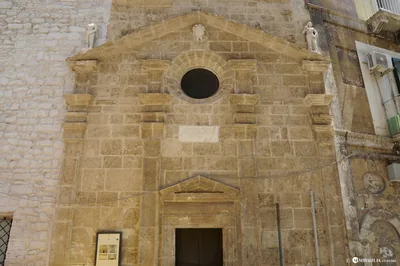 Churches and cryptsChiesa di Sant'Andrea degli ArmeniThe 14th-century church where Armenians once gathered to pray is now the
focus of an innovative project to enhance the city's cultural heritage. Taranto very close
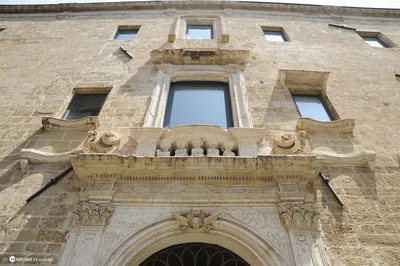 Castles, towers and palacesEx Convento di San FrancescoAfter the visit of San Francesco d’Assisi, the faithful decided to build a
church and a convent in his honor in Taranto. Taranto very close
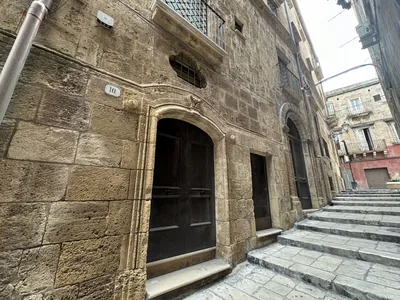 Castles, towers and palacesPalazzo FornaroThis 18th-century building nestled on the main street of the old town
center of Taranto is today home to a medieval museum. Taranto very close
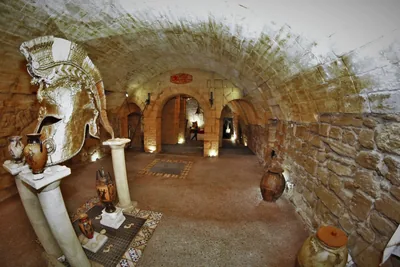 Museums and theatresSpartan Museum of Taranto - Ipogeo BellaciccoThe Taranto Hypogeum is an amazing architectural structure where elements
and artifacts can be found that can be traced back to the different phases
of occupation of the site from prehistoric to modern times Taranto very close
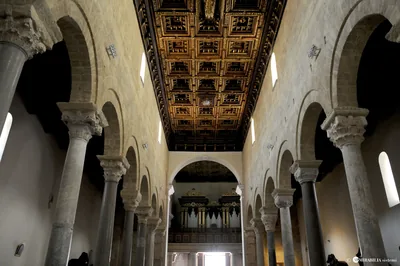 Churches and cryptsCathedral of San CataldoA triumph of stuccoes, marbles and statues enshrouds the visitor stepping
inside the basilica dedicated to San Cataldo, among Taranto's most
sumptuous churches. Taranto very close
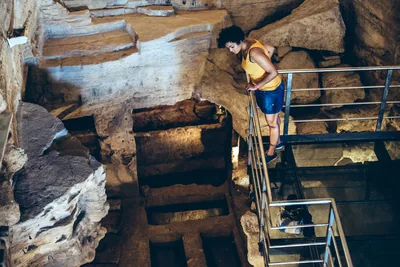 ArchaeologyUnderground tomb in Palazzo Delli PontiAn eighteenth-century noble palace has in its undergrounds a really ancient
burial place, for an amazing journey in the history. Taranto very close